Style Guidelines
Style Guidelines
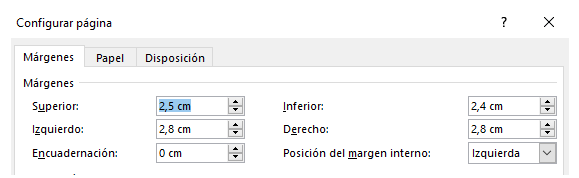
The manuscript must include citations, footnotes, tables, figures, and bibliographic references. It must be clearly typed and presented in a clean format, using Arial font, size 11 points, with justified alignment and 1.5 line spacing. The title must be centered, written in Spanish and English, in bold, uppercase letters, and with a concise and informative style. Margins must be symmetrical, 2.5 cm.
Authors must be identified by their full surname (first and second surname), followed by their given names, separated by commas. This information must be centered, one line below the title, and must include each author’s academic degree and institutional affiliation (in bold, mentioning first the home institution), as well as their corresponding email address.
Next, the abstract in Spanish must be included, followed by the Abstract in English, with a maximum length of 250 words. It must contain: a brief introduction, methodology, results, and conclusion. Finally, keywords in both languages (Keywords) must be included. All keywords must have a maximum of five words, organized alphabetically and justified.
-Introduction. This section should introduce the reader to the topic under study. It must be supported by bibliographic references and conclude with the statement of the objective of the work. In-text citations for one or two authors should include, in parentheses, the first author’s surname (narrative style), followed by a comma and the year of publication. For references with more than two authors, only the surname of the first author should be indicated, followed by (et al.,) and the year of publication.
-Conclusions. These must correspond to the research objectives and the results obtained. They should be presented from the specific to the general.
-References. Only references cited in the text of the article should be included. They must be listed alphabetically, and if there are multiple citations by the same author, they should be ordered in descending chronological order. The number of authors listed per reference must not exceed six; if there are more, only the first six should be mentioned, followed by the abbreviation et al. The formats for presenting different types of references are detailed below.
Journal articles: Author(s). Title of the article. (Year). Journal title in italics. Volume (issue): initial–final page numbers.
Articles or documents consulted on the web: Author(s). Title of the article or document. (Year). Available at: http://www.colombia.gov.co/ncl.doc/EID.htm. Accessed on: date of consultation.
Books: Author(s). Title of the book. Edition. Place of publication: Publisher, year. (If the consultation was based on a book chapter, include after the year the page range consulted, preceded by the abbreviation p.).
Legal documents: Title of the law, decree, agreement, etc. Name of the entity that issued the legal document. Country, year.
Conference proceedings: Author(s). Title of the paper. (Year). Official name of the conference. Place of publication: Publisher. Initial–final page numbers of the paper.
-Acknowledgements. Optional.
Full articles (scientific and technological research articles) must also include:
-Materials and Methods. This section contains the necessary and/or referenced information to ensure reproducibility of the experimental designs. If there are clearly differentiated subsections, they must be indicated with appropriate headings (e.g., sampling, sample preparation, etc.).
-Results and Discussion. This section presents the results obtained in an organized, clear, and concise manner, based on tables and figures. Information should not be presented in both formats simultaneously. There must be an appropriate integration of results and discussion, exploring the meaning or analysis of the results, without redundancy.
-Figures and Tables. Illustrations will be referred to as figures and must be in black and white. Charts will be referred to as tables. As they appear in the article, they must be referenced in the text (e.g., see Table 1 and/or see Figure 1). Tables and figures must include the source; otherwise, authorship will be assumed. Authors must comply with the International System of Units regarding units and abbreviations.

Fig. 1. Figure title
Source: Author’s own elaboration
Table 1. Table title
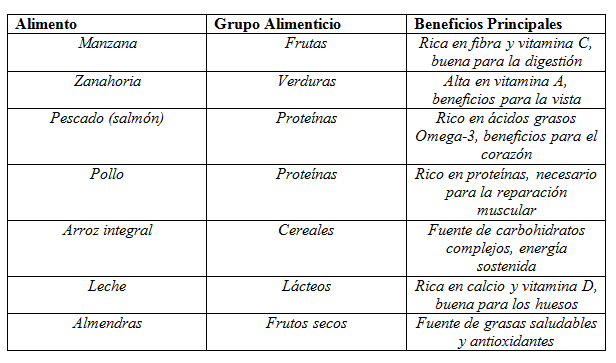
Source: Author’s own elaboration
CRediT Taxonomy
In the @Limentech Journal, the CRediT taxonomy (Contributor Roles Taxonomy) is implemented as a key tool to recognize and detail the specific contributions of each author in the creation and development of scientific articles. This taxonomy, which breaks down responsibilities into categories such as conceptualization, methodology, writing, data analysis, and funding acquisition, allows for a clearer and more accurate representation of individual roles within a research team. Through its use, @Limentech promotes transparency, proper recognition, and accountability, which are fundamental principles in contemporary scientific publishing. In this way, each author is ensured appropriate credit for their contribution, fostering a collaborative and fair scientific environment.
Any article to be considered by the Editorial Committee for possible publication in the @Limentech Journal of Food Science and Technology must include, in the following order:
Article Submission
All articles must comply with the standards established and indicated in the latest issue published by the @Limentech Journal of Food Science and Technology. Manuscripts must be submitted by email to: revista.alimentech@unipamplona.edu.co, in Microsoft Word® and PDF formats. A cover letter must also be attached in which the author(s) declare that the content has not been previously published and that no conflict of interest exists. Once the article is received, the journal will notify receipt by email to the corresponding author.