Style Guidelines
The manuscript —including citations, footnotes, tables, figures, and references— must be clearly typed and formally presented, using Calisto MT, 11-point font, single spacing, in double-column format.
The article title must be centered and presented in Spanish and English. All other headings and subheadings must be written in lowercase with an initial capital letter and justified. The full name and surname of each author must be included, along with their respective academic or scientific degree. Subsequently, institutional affiliation, faculty or research group, city, department/state, country, ORCID, and email address must be indicated.
The Abstract (maximum 200 words in Spanish and English); Keywords (3 to 5 terms from the article. Terms must be selected from the Medical Subject Headings (MeSH) list of Index Medicus or LILACS to facilitate indexing in databases, indicating the source. Links to consult keywords in Spanish: http://decs.bvs.br/E/homepagee.htm; and in English: http://www.nlm.nih.gov/mesh/.)
The manuscript structure must be organized in the following order:
- Introduction
- Methodology
- Results
- Discussion
- Conclusions
- References
- Appendices (if applicable)
All sections must be written with justified alignment and strictly comply with the editorial standards established by the journal.
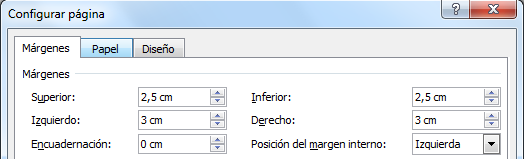
The rest of the manuscript must be in double column format (equal column width of 7.3 cm and spacing of 1.39 cm), single spacing, on letter-size paper (21.5 x 28 cm), with left and right margins of 2.8 cm, top margin of 2.5 cm, and bottom margin of 2.4 cm.
Articles must have a maximum length of 12 to 15 pages; except for review articles, which may have up to 10 pages. All pages must be consecutively numbered in the footer, aligned to the right.
Figures
Figures include all visual resources accompanying the manuscript: statistical graphs, photographs, maps, diagrams, illustrations, and similar materials. Their purpose is to complement, synthesize, or facilitate understanding of the information presented, without duplicating data already described in the text.

Figure 1. Percentage distribution of the level of physical activity in the studied sample.
Source: Author’s own elaboration.
The word Figure must be followed by consecutive Arabic numbering according to the order of appearance (Figure 1, Figure 2, etc.). It must be brief, clear, and descriptive. The title and complementary information must be placed below the figure.
Tables
Tables must be clear, self-contained, and must not duplicate information presented in the text. Their function is to complement, synthesize, or replace narrative information when methodologically appropriate. Each table must allow understanding of the data without consulting the body of the article.
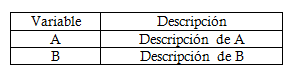
Table 1: Distribution of participants according to level of physical activity.
Source: Author’s own elaboration.
The word Table must be followed by consecutive Arabic numbering according to the order of appearance in the manuscript (Table 1, Table 2, etc.). Content must be organized in rows and columns with precise headings. Explanatory notes, methodological clarifications, or abbreviations must be placed below the table. The design must use only horizontal lines; vertical lines and unnecessary shading are not permitted.
Subheadings
Subheadings indicate the main subdivisions of the text and must guide the reader through the topics addressed. There must be no more than three levels of subheadings. They must accurately reflect the organization of the document.
Footnotes and Citations
Each bibliographic reference must be cited in the text with an Arabic number in parentheses according to the consecutive order of appearance.
References
For their presentation, the journal Actividad Física y Desarrollo Humano follows APA style guidelines, using the term References. They must be listed consecutively without leaving a space between numbers. The article must contain a minimum of 20 references. In the case of a review article, the minimum required is 50 references.
Journal articles: Author(s). Title of the article. (Year). Name of the journal. Volume (issue): first–last page of the article.
Articles or documents consulted online: Author(s). Title of the article or document. (Year). Available at: http://www.colombia.gov.co/ncl.doc/EID.htm.
Books: Author(s). Title of the book. Edition. Place of publication: Publisher, year. (If a specific chapter was consulted, include after the year the page range preceded by “pp.”).
Legal documents: Title of the law, decree, agreement, etc. Name of the issuing entity. Country, year.
Conference proceedings: Author(s). Title of the paper. (Year). Official name of the conference. Place of publication: Publisher. First–last page of the paper.
Bibliographic Reference Criteria
Authors are advised to consider the following criteria when selecting references:
- Maximum 30% Latin American references.
- Minimum 70% references from international journals published outside Latin America.
- Minimum 70% references from the last five years.
- Maximum 15% references to monographs.
Acknowledgments. Optional. Full research articles (scientific and technological research articles) must also include:
CRediT Taxonomy
The Journal of Physical Activity and Human Development implements the CRediT (Contributor Roles Taxonomy) as a key tool to recognize and detail the specific contributions of each author in the creation and development of scientific articles. This taxonomy breaks down responsibilities into categories such as conceptualization, methodology, writing, data analysis, and funding acquisition, allowing a clearer and more precise representation of individual contributions within a research team. Through its use, the journal promotes transparency, proper recognition, and accountability—fundamental aspects of contemporary scientific publishing. In this way, each author receives appropriate credit for their participation, fostering a collaborative and fair scientific environment.
Any article to be considered by the Editorial Committee for possible publication in the Journal of Physical Activity and Human Development must contain, in order:
Submission of Articles
All articles must comply with the standards established and indicated in the latest issue published by the Journal of Physical Activity and Human Development. Manuscripts must be submitted by email to: actividadfisica@unipamplona.edu.co in Microsoft Word® and PDF formats. A letter must also be attached in which the author(s) declare that the content has not been previously published and that there is no conflict of interest. Once the article is received, the journal will acknowledge receipt via email to the corresponding author.