Obtaining biological silage from lactic fermentation of fish waste
DOI:
https://doi.org/10.24054/bistua.v21i2.2410Keywords:
Aquaculture, Biotechnology, Nutrition, FishAbstract
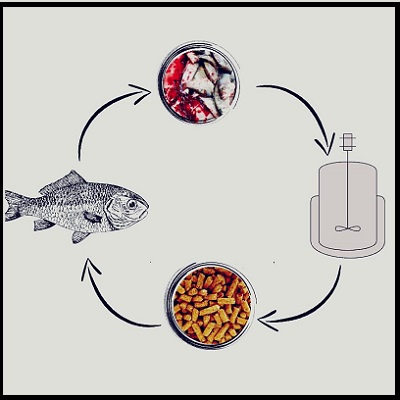
Fish waste, when used as raw material, is considered a valuable byproduct due to its nutrient content, and through transformation processes, it can help prevent environmental pollution. The waste generated from fishing activities is not adequately treated in terms of its final disposal, which contributes to environmental contamination. Additionally, these waste materials are not used rationally due to a lack of knowledge regarding the applicable technological processes for utilizing the byproducts generated on a daily basis. This study aims to characterize and utilize these agro-industrial waste materials in the production of biological silage. The objective of this research was to obtain biological silage using fish waste in Gamarra (Cesar). An experimental factorial design of 2 x 3 was employed, with the first factor being the carbon source (molasses) at two levels of 12% and 18%, and the second factor being the fermenting agent, which utilized yogurt at three levels of 6%, 11%, and 15%. These factors were evaluated at a confidence level of 95% (P<0.05), resulting in six treatments with four replications each (24 experimental units). The mixtures obtained were placed in plastic reactors and kept at room temperature for 15 days, with pH and acidity levels monitored throughout the experiment. After this period, the silage was subjected to hot air drying. The final product exhibited protein levels ranging from 32% to 43% and fat content ranging from 19% to 33%. Microbiological analysis confirmed the product's safety as animal feed, making it suitable for consumption.
Downloads
References
FAO. (2020). The State of World Fisheries and Aquaculture. Rome: Food and Agriculture Organization of the United Nations.
Minagricultura. (2021). Sector Pesquero y Acuícola en Colombia. Bogotá: Ministerio de Agricultura y Desarrollo Rural.
García-Sifuentes, C., et al. (2020). “Characterization of Fish Waste for the Development of Sustainable Aquafeed.” Journal of Aquaculture Research and Development, 11(3), 1-5.
Lúquez-Pérez, Y., & Hleap-Zapata, J. (2020). “Fishery Waste in Colombia: Status and Potential Uses.” Journal of Fisheries and Aquatic Science, 15(1), 23-31.
Afreen, M., & Ucak, I. (2021). “Use of Fish Silage in Animal Feed: A Review.” Journal of Agricultural and Veterinary Sciences, 4(1), 13-17.
Gomez, J., et al. (2014). “Evaluation of Different Silage Additives in Ensiling Sardine Wastes for Animal Feed.” Animal Feed Science and Technology, 188, 65-72.
Lúquez, Y., & Hleap, J. (2020). “Fish Silage: An Alternative to Manage Fishery Waste in Colombia.” Journal of Fisheries and Aquatic Science, 15(2), 46-54.
Yamada, Y., et al. (2000). “Silage Fermentation Characteristics of Fish Waste.” Journal of Applied Microbiology, 88(3), 445-449.
Perea, S. (2017). “Elaboración de ensilado de pescado: Una alternativa para la conservación de desechos o subproductos del pez.” Revista de Ciencia y Tecnología, 3(2), 50-60.
Abimorad, E. G., Naves, L. P., & Oliveira, R. P. (2009). Caracterização de iogurtes com culturas probióticas comerciais. Revista do Instituto de Laticínios Cândido Tostes, 64(6), 371-377.
Carreño, A. L., & Hurtado, A. F. (2017). Métodos de análisis microbiológicos para alimentos. Pontificia Universidad Javeriana.
NTC 282:2002. (2002). Productos alimenticios. Determinación de nitrógeno (método de kjeldahl) y cálculo del contenido de proteína.
NTC 529:2009. (2009). Alimentos para animales. Determinación de humedad.
NTC 668:1973. (1973). Alimentos. Determinación de la fibra cruda. Método gravimétrico.
McGrath, J. M., Naeem, A., & Coleman, J. G. (2016). The effect of fermenting corn with Lactobacillus plantarum, Lactobacillus buchneri, and Lactobacillus fermentum on feed intake, digestibility, and weight gain in dairy heifers. Journal of Dairy Science, 99(5), 3712-3720.
Hernández Sampieri, R., Fernández Collado, C., & Baptista Lucio, P. (2014). Metodología de la investigación. McGraw-Hill.
De Arruda, L.F.; Borghesi, R.; Oetterer M. 2007. Use of fish waste as silage -A review. Brazilian Archives of Biology and Technology, 50(5): 879-886. DOI: 10.1590/s1516-89132007000500016
Alfio, V.G.; Manzo, C.; Micillo, R. 2021. From fish waste to value: An overview of the sustainable recovery of omega-3 for food supplements. Molecules (Basel, Switzerland), 26(4):1002.DOI: 10.3390/molecules2604 1002
He, C.; Cao, J.; Bao, Y.; Sun, Z.; Liu, Z.; Li, C. 2021. Characterization of lipid profiling in three parts (muscle, head and viscera) of tilapia (Oreochromis niloticus) using lipidomicswith UPLC-ESI-Q-TOF-MS. Food Chemistry, 347(58):129057.DOI: 10.1016/j.foodchem.2021.129057
Nilsson, R.; Rydin, C.; Stewart, J.W.; Takahashi, M. 1963. Fermentation as a means of preserving organic materials. En Acta ChemicaScandinavica:Vol.17.supl:174-179.DOI:10.3891/acta.chem.scand.17s-0174.
Olsen, R. L.; Toppe, J. 2017. Fish silage hydrolysates: Not only a feed nutrient, but also a useful feed additive. Trends in Food Science and Technology, 66:93-97. DOI: 10.1016/j.tifs.2017.06.003
Arason, S. 1994. Production of fish silage. In: Martin A.M. (eds) Fisheries Processing. Springer, Boston, MA. 244-272p. DOI: 10.1007/978-1-4615-5303-8_11
De Vuyst, L.; Vandamme, E.J. 1994. Antimicrobial potential of lactic acid bacteria. En Bacteriocins of Lactic Acid Bacteria. USA. Ed. Springer. 91-142p. DOI: 10.1007/978-1-4615-2668-1_3
Van ’T Land, M.; Vanderperren, E.; Raes, K. 2017. The effect of raw material combination on the nutritional composition and stability of four types of autolyzed fish silage. Animal Feed Science and Technology, 234(October): 284-294. DOI: 10.1016/j.anifeedsci.2017.10.009
Oliveira Cavalheiro, J.M.; Oliveira De Souza, E.; Bora, P.S. 2007. Utilization of shrimp industry waste in the formulation of tilapia (Oreochromis niloticus Linnaeus) feed. Bioresource Technology, 98(3):602-606. DOI: 10.1016/j.biortech.2006.02.018
Holguín, M.; Caicedo, L.; Veloza, L. 2009. Estabilidad de almacenamiento de ensilados biológicos a partir de residuos de pescado inoculados con bacterias ácido-lácticas. Revista de la Facultad de Medicina Veterinaria y de Zootecnia, 56(II):95-104.
Goosen, N.J.; De Wet, L.F.; Görgens, J.F.; Jacobs, K.; De Bruyn, A. 2014. Fish silage oil from rainbow trout processing waste as alternative to conventional fish oil in formulated diets for Mozambique tilapia Oreochromis mossambicus. Animal Feed Science and Technology, 188:74-84.
Afreen, M.; Ucak, I. 2020. Fish processing wastes used as feed ingredient for animal feed and aquaculture feed. Journal of Survey in Fisheries Sciences, 6(2):55-64. DOI: 10.18331/SFS2020.6.2.7
Ramírez Ramírez, J.; Loya Olguín, J.; Ulloa, J.; Gutiérrez-Leyva, R.; Silva Carrillo, Y. 2020. Aprovechamiento de desechos de pescado y cáscara de piña para producir ensilado biológico. Abanico Veterinario, 10:1-12. DOI: 10.21929/abavet2020.29
Gaviria G, Y. S., Londoño F, L. F., & Zapata M, J. E. 2020. Effects of chemical silage of red tilapia viscera (Oreochromisspp.) as a source of protein on the productive and hematological parameters in isa-brown laying hens (Gallus gallus domesticus). Heliyon, 6(12), p. e05831. DOI: 10.1016/j.heliyon.2020.e05831
Viana, M. T. 2000. Nutrición de abulón. pp 33-41En: Civera-Cerecedo, R., Pérez-Estrada, C.J., Ricque-Marie, D. y Cruz-Suárez, L.E. (Eds.) Avances en Nutrición Acuícola IV. Memorias del IV Simposium Internacional de Nutrición. Acuícola. Ed: La Paz B.C.S. (Ciudad de México). 15-18p.
Sierra, E.; Espinosa, A.; Real, F.; Herráez, P.; Castro, P.; Fernández, A. 2011. Histología y patología de los peces. Parte I: Biología y necropsia de los peces. Revista Canaria de las ciencias veterinarias, 44-51.
Sandbol, P. 1993. Nueva tecnología en la producción de harina de pescado para piensos: implicaciones sobre la evaluación de la calidad. IX Curso de especialización FEDNA, Barcelona, 1-28p.
Suarez, L.M.; Montes, J.R.; Zapata, J. E. 2018. Optimización del contenido de ácidos en ensilados de vísceras de tilapia roja (oreochromis spp.) con análisis del ciclo de vida de los alimentos derivados. Información tecnológica, 29(6):83-94. DOI: 10.4067/S0718-07642018000600083
Lindgren, S.; Pettersson, K.; Kaspersson, A.; Jonsson, A.; Lingvall, P. 1985. Microbial dynamics during aerobic deterioration of silages. Journal of the Science of Food and Agriculture, 36(9):765-774. DOI: 10.1002/jsfa.2740360902
BISTUA Rev. FCB, Vol.21(2), (2023)17
Lindgren, S.; Pleje, M. 1983. Silage fermentation of fish or fish waste products with lactic acid bacteria. Journal of the Science of Food and Agriculture, 34(10):1057-1067. DOI: 10.1002/jsfa.2740341005
Torres De Oliveira, A.L.; Oliveira Sales, R.; Sales Bruno, F.; Batista Santiago, J. 2013. Avaliação microbiológica da silagem biológica de resíduos de pescado das indústrias de filetagem de tilápia do Nilo (Oreochromis niloticus). Revista Brasileira de Higiene e Sanidade Animal, 07(2):68-85. DOI: 10.5935/1981-2965.20130011
Coblentz, W.K.; Akins, M.S. 2018. Silage review: Recent advances and future technologies for baled silages. Journal of Dairy Science, 101(5): 4075-4092. DOI: 10.3168/jds.2017-13708
Tacon, A.G.J. 2020. trends in global aquaculture and aqua feed production: 2000–2017. Reviews in Fisheries Science and Aquaculture, 28(1):43-56. DOI: 10.1080/23308249.2019.1649634
Mayta, A.C.; García, I.; Dabrowski, K.; Jiménez, R. (2021). Bacterial diversity analysis and evaluation proteins hydrolysis during the acid whey and fish waste fermentation. Microorganisms, 9(1):100. DOI: 10.3390/microorganisms9010100
Lakhal, D.; Bahlaouan, B.; Boutaleb, N.; Bennani, M.; El Antri, S. 2020. Agricultural valorization by biotransformation of fish wastes combined with grape marc and molasses. Mediterranean Journal of Chemistry, 10(7):723. DOI: 10.13171/mjc1070200807144
Downloads
Published
Versions
- 2023-12-12 (3)
- 2023-08-30 (2)
- 2023-07-31 (1)
Issue
Section
License
Copyright (c) 2023 Margarita Del Rosario Salazar Sánchez, Ingris Yohana Hernández Martínez, Rodrigo Rene Cuello Marín, Iris Karine Martínez Quintero, Jeannie Vilardy Naranjo

This work is licensed under a Creative Commons Attribution-NonCommercial-NoDerivatives 4.0 International License.