Cocción de arroz: eficiencia energética, valor nutricional y metales pesados
DOI:
https://doi.org/10.24054/bistua.v19i2.1016Palabras clave:
Cocción de arroz, Eficiencia energética, Valor nutricional, Metales pesadosResumen
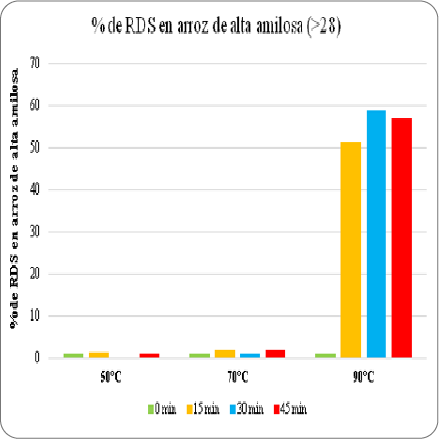
El arroz es uno de los cereales más producidos y consumidos en el mundo, debido a su aporte calórico a la dieta de los seres humanos. El componente principal del arroz es el almidón, pero también es una fuente importante de minerales, fibras y vitaminas. El arroz puede contener también niveles importantes de metales tóxicos. Existen varios métodos utilizados para la cocción del arroz a nivel doméstico, siendo los más comunes el arroz hervido, la cocción en olla arrocera eléctrica, cocción a presión y cocción en microondas. Se evaluó la eficiencia energética de los métodos hallando que la cocción en olla arrocera eléctrica logró un ahorro del 35 – 40 % en comparación con el método por microondas y el tradicional. La cocción óhmica resultó ser la más rápida, con un tiempo de 5 – 7,5 minutos. Este cereal sufre procesos previos a su consumo, los que pueden afectar el contenido de los compuestos mencionados. El lavado del grano genera una reducción del contenido de minerales esenciales y tóxicos, así como de vitaminas B1 y B2 y de ácido fítico. El remojo no generó cambios significativos en el contenido de vitamina B2, minerales y ácido fítico. La cocción por microondas provocó una menor disminución de vitaminas y ácido fítico que la cocción a altas presiones. La cocción con remojo previo provoca no solo la disminución de metales pesados, sino también de minerales esenciales. Por último, otros autores estudiaron el efecto del tiempo y temperatura de cocción con el fin de analizar la variabilidad de las fracciones digeribles del almidón de arroz. Encontraron que, al aumentar la temperatura de 50 a 90°C, la fracción de almidón de digestión rápida se incrementa.
Descargas
Referencias
FAO.. Food Outlook - Biannual Report on Global Food Markets. Food Outlook, 1. Rome, 2020. Acceso 25 de septiembre de 2020. https://doi.org/10.4060/ca9509en.
Kusano M., Fukushima A., Fujita N.O., Kobayashi M., Oitomen F., Ebana K., Saito K. Deciphering Starch Quality of Rice Kernels Using Metabolite Profiling and Pedigree Network Analysis. Molecular Plant 5(2) (2012) 442–451.
Galán M.G., Drago S.R. Food matrix and cooking process affect mineral bioaccessibility of enteral nutrition formulas. Journal of the Science of Food and Agriculture 94(3) (2014) 515-521. https://doi.org/10.1002/jsfa.6280.
Liu K., Zheng J., Wang X., Chen, F. Effects of household cooking processes on mineral, vitamin B, and phytic acid contents and mineral bioaccessibility in rice. Food Chemistry 280 (2019) 59-64. https://doi.org/10.1016/j.foodchem.2018.12.053.
Kennedy G., Burlingame B. Analysis of food composition data on rice from a plant genetic resources perspective. Food Chemistry 80(4) (2003) 589-596. https://doi.org/10.1016/S0308-8146(02)00507-1.
Gibson G.E., Hisch J.A., Cirio R.T., Jordan B.D., Fonzetti P., Elder J. Abnormal thiamine-dependent processes in Alzheimer's Disease. Lessons from diabetes. Molecular and Cellular Neuroscience 55 (2013) 17-25. https://doi.org/10.1016/j.mcn.2012.09.001.
Powers H.J. Riboflavin (vitamin B-2) and health. The American Journal of Clinical Nutrition 77(6) (2003) 1352–1360. https://doi.org/10.1093/ajcn/77.6.1352.
Abtahi M., Fakhri Y., Oliveri Conti G., Keramati H., Zandsalimi Y., Bahmani Z., Hosseini Pouya R., Sarkhosh M., Moradi B., Amanidaz N. Heavy metals (As, Cr, Pb, Cd and Ni) concentrations in rice (Oryza sativa) from Iran and associated risk assessment: a systematic review. Toxin Reviews 36(10) (2017) 331–341. https://doi.org/10.1080/15569543.2017.1354307.
SharafiK, Nodehi R.N., Yunesian M., Mahvi A.H., Pirsaheb M., Nazmara S. Human health risk assessment for some toxic metals in widely consumed rice brands (domestic and imported) in Tehran, Iran: uncertainty and sensitivity analysis. Food Chemistry 277 (2019) 145–155. https://doi.org/10.1016/j.foodchem.2018.10.090.
Pirsaheb M., Fattahi N., SharafiK., Khamotian R., Atafar Z. Essential and toxic heavy metals in cereals and agricultural products marketed in Kermanshah, Iran, and human health risk assessment. Food Additives and Contaminants Part B 9(1) (2016) 15–20. https://doi.org/10.1080/19393210.2015.1099570.
YousefiN., Meserghani M., Bahrami H., Mahvi A.H. Assessment of human health risk for heavy metals in imported rice and its daily intake in Iran. Research Journal of Environmental Toxicology 10(1) (2016) 75-81. https://doi.org/10.3923/rjet.2016.75.81.
OMS. Arsénico, 2018. Acceso 13 de septiembre de 2020. https://www.who.int/es/news-room/fact-sheets/detail/arsenic
Lakshmi S., Chakkaravarthi A., Subramanian R., Singh V. Energy consumption in microwave cookingof rice and its comparison with other domestic appliances. Journal of Food Engineering 78 (2007) 715–722. https://doi.org/10.1016/j.jfoodeng.2005.11.011.
He M., Qiu C., Liao Z., Sui Z., Corke H. Impact of cooking conditions on the properties of rice: Combined temperature and cooking time. International Journal of Biological Macromolecules 117 (2018) 87–94. https://doi.org/10.1016/j.ijbiomac.2018.05.139.
Medina M.B., Munitz M.S., Resnik S.L. Effect of household rice cooking on pesticide residues. Food Chemistry 342 (2020) 128311. https://doi.org/10.1016/j.foodchem.2020.128311.
Al-Harahsheh M., Kingman S.W. Microwave-assisted leaching—a review. Hydrometallurgy 73(3–4) (2004) 189-203. https://doi.org/10.1016/j.hydromet.2003.10.006.
Meda V., Orsat V., Raghavan V., Microwave heating and the dielectric properties of foods, in The Microwave Processing of Foods, 2nd Edition, Woodhead Publishing Series in Food Science, Technology and Nutrition, 2017, pp. 23-43. https://doi.org/10.1016/B978-0-08-100528-6.00002-4.
Gavahian M., Farahnaky A., Farhoosh R., Javidnia K., Shahidi F. Extraction of essential oils from Mentha piperita using advanced techniques: Microwave versus ohmic assisted hydrodistillation. Food and Bioproducts Processing 94 (2015) 50-58. https://doi.org/10.1016/j.fbp.2015.01.003.
Gavahian M., Chu Y-H., Sastry S. Extraction from Food and Natural Products by Moderate Electric Field: Mechanisms, Benefits, and Potential Industrial Applications. Comprehensive Reviews in Food Science and Food Safety 17(4) (2018) 1040-1052. https://doi.org/10.1111/1541-4337.12362.
Gavahian M., Lee Y-T., Chu Y-H. Ohmic-assisted hydrodistillation of citronella oil from Taiwanese citronella grass: Impacts on the essential oil and extraction médium. Innovative Food Science & Emerging Technologies 48 (2018) 33-41. https://doi.org/10.1016/j.ifset.2018.05.015.
Gavahian M., Chu Y-H., Farahnaky A. Effects of ohmic and microwave cooking on textural softening and physical properties of rice. Journal of Food Engineering 243 (2019) 114-124. https://doi.org/10.1016/j.jfoodeng.2018.09.010.
Ekezie F-G.C., Sun D-W., Han Z., Cheng J-H. Microwave-assisted food processing technologies for enhancing product quality and process efficiency: A review of recent developments. Trends in Food Science & Technology 67 (2017) 58-69. https://doi.org/10.1016/j.tifs.2017.05.014.
Mihucz V.G., Silversmit G., Szalóki I., De Samber B., Schoonjans T., Tatár E., Vincze L., Virág I., Yao J., Záray G. Removal of some elements from washed and cooked rice studied by inductively coupled plasma mass spectrometry and synchrotron based confocal micro-X-ray fluorescence. Food Chemistry 121 (2010) 290–297. https://doi.org/10.1016/j.foodchem.2009.11.090.
Jafar Q., Basem D.F., Maha M.A.J., Ereifej K. Variation in physio-chemical characteristics, mineral concentrations and cookability of rice marketed in Jordan. Pakistan Journal of Nutrition 7(1) (2008) 141–145. https://doi.org/10.3923/pjn.2008.141.145.
Egli I., Davidsson L., Juillerat M.A., Barclay D., Hurrell R.F. The Influence of Soaking and Germination on the Phytase Activity and Phytic Acid Content of Grains and Seeds Potentially Useful for Complementary Feedin. Journal of Food Science 67(9) (2006) 3484-3488. https://doi.org/10.1111/j.1365-2621.2002.tb09609.x.
Roohani N., HurrellR., Wegmueller R., Schulin R. Zinc and phytic acid in major foods consumed by a rural and a suburban population in central Iran. Journal of Food Composition and Analysis 28(1) (2012) 8-15. https://doi.org/10.1016/j.jfca.2012.07.005.
Horner N.S., Beauchemin D. The effect of cooking and washing rice on the bio-accessibility of As, Cu, Fe, V and Zn using an on-line continuous leaching method. Analytica Chimica Acta 758 (2013) 28-35. https://doi.org/10.1016/j.aca.2012.11.011.
Prodanov M., Sierra I., Vidal Valverde C. Influence of soaking and cooking on the thiamin, riboflavin and niacin contents of legumes. Food Chemistry 84(2) (2004) 271-277. https://doi.org/10.1016/S0308-8146(03)00211-5.
Liang J., Li Z., Tsuji K., Nakano K., Nout M.J.R., Hamer R. Milling characteristics and distribution of phytic acid and zinc in long-, medium-and short-grain rice. Journal of Cereal Science 48(1) (2008) 83-91. https://doi.org/10.1016/j.jcs.2007.08.003.
Sharafi K., Yunesian M., Mahvi A.H., Pirsaheb M., Nazmara S., Nohed R.N. Advantages and disadvantages of different pre-cooking and cooking methods in removal of essential and toxic metals from various rice types human health risk assessment in Tehran households, Iran. Ecotoxicology and Environmental Safety 175 (2019) 128-137. https://doi.org/10.1016/j.ecoenv.2019.03.056.
Hemalatha S., Platel K., Srinivasan K. Influence of heat processing on the bioaccessibility of zinc and iron from cereals and pulses consumed in India. Journal of Trace Elements in Medicine and Biology 21(1) (2007) 1-7. https://doi.org/10.1016/j.jtemb.2006.10.002.
Mwale T., Rahman M., Mondal D. Risk and benefit o f different cooking methods on essential elements and arsenic in rice. International Journal of Environmental Research and Public Health 15(6) (2018) 1056. https://doi.org/10.3390/ijerph15061056.
Mihucz V.G., Tatár E., Virág I., Zang C., Jao Y., Záray G.Arsenic removal from rice by washing and cooking with water. Food Chemistry 105 (2007) 1718-1725. https://doi.org/10.1016/j.foodchem.2007.04.057.
Descargas
Publicado
Número
Sección
Licencia
Derechos de autor 2021 María Belén Medina, Rodrigo Barragán, David Colman Casanova, Micaela Piacenza, Martín Sebastián Munitz

Esta obra está bajo una licencia internacional Creative Commons Atribución-NoComercial-SinDerivadas 4.0.