Comparative study of the mythotic index in the meristem of Allium cepa L
DOI:
https://doi.org/10.24054/bistua.v20i1.1158Keywords:
Mitosis, Onion bulb, MeristemAbstract
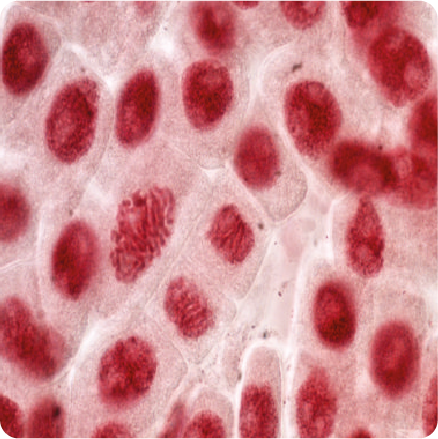
The mitotic index percentage bioassay in Allium cepa is currently used in various fields of science and industry to determine the cytotoxic potential of multiple compounds, due to its high sensitivity, because it is easy to access, economical and because of its practicality in the moment to do it. In the present study, this mitotic index percentage was determined under specific growth conditions of the root meristem A. cepa (growth time of 4 days, tap water changed twice a day, temperature between 20 and 22 ° C to compare it with previous studies and observe the variability or similarity of the results. It was established that the mitotic percentage under the experimental conditions for this trial was 14.92 SD±1.18, which is consistent with reported studies, but there is also variability in the data that may be due to the fact that the percentage of mitotic index may be influenced by the development conditions of the A. cepa meristem such as the type of water in which the bulb grows, the root growth time, the photoperiod, temperature and physiological state of the onion bulb. In conclusion, the percentage of mitotic index obtained presents a minimal difference with other studies, being an effective model for in vitro replication of antimitotic activity.
Downloads
References
C. Cumpa-Yupton, F. Zavala-de la Cruz, “determinación del índice mitótico de meristemos radiculares de Allium cepa expuestas al extracto etanólico de hojas de Erythroxylum coca¨ coca¨ a diferentes concentraciones y tiempos de exposición”, Sagasteguiana, pp. 29-38, 2013.
D. Deogade, P. Nasare, “Mitotic index (MI) and phase index (PI) in Allium sativum linn. (variety agrifound white and yamuna safed)”, I J R B A T, vol. 4, nº 1, pp. 188-192, 2016.
K. Kavitha, M. Shijil-Kumar, C. Lalitha, “Cytotoxicity testing of the fruit extracts of Rauvolfia tetraphylla L. using the Allium cepa chromosome aberration assay”, International Journal of Advanced Research, vol. 4, nº 1, pp. 1258- 1264, 2016.
A. Salazar-Mercado, J. D. Quintero-Caleño,“Cytotoxic evaluation of glyphosate, using Allium cepa L. as bioindicator”, Science of the total environment, vol 700, pp. 1-8, 2020. DOI:10.1016/j.scitotenv.2019.134452
S. A. Salazar-Mercado, C. A. Torres-León, J. P. Rojas-Suárez,“Cytotoxic evaluation of sodium hypochlorite, using Pisum sativum Las effective bioindicator”, Ecotoxicology and environmental safety, vol 173, pp. 71-76, 2019. DOI:10.1016/j.ecoenv.2019.02.027
S. A. Salazar-Mercado, H. A. Maldonado-Bayona, “Evaluation of the cytotoxic potential of sodium hypochlorite using meristematic root cells of Lens culinarisMed”,Science of the total environment, vol 701,pp. 1-7, 2020. DOI: 10.1016/j.scitotenv.2019.134992
S. A. Salazar-Mercado,H. A. Maldonado-Bayona, “Evaluation of cytotoxic potential of chlorpyrifos using Lens culinarisMed as efficient bioindicator”, Ecotoxicology and environmental safety, vol 183,pp. 1-7, 2019. DOI: 10.1016/j.ecoenv.2019.109528
S. A. Salazar-Mercado, J. D. Quintero-Caleño, “Determination of malathion's toxic effect on Lens culinarisMedik cell cycle”, Heliyon, vol 6, pp. 1-5, 2020. DOI:10.1016/j.heliyon.2020.e04846
S. A. Salazar-Mercado, J. D. Quintero-Caleño,J.P. Rojas-Suárez “Cytogenotoxic effect of propanil using the Lens culinarisMed and Allium cepaL test”, Chemosphere, vol 249, pp. 1-8, 2020. DOI:10.1016/j.chemosphere.2020.126193
S. A. Salazar-Mercado, J. D. Quintero-Caleño,“Use of Lens culinarisMed test as environmental bioindicator to identify the cytogenotoxic effect of paraquat pesticide”, Environmental Science and Pollution Research, vol 28, pp. 51321-51328, 2021. DOI:10.1007/s11356-021-14352-0
S. S. Selmi, T. S. Abdelfattah, F, D. Mostafa, “Deregulation of Mitosis Progression and Cytotoxic Effect Triggered in Allium Cepa L. Roots by Rubus Sancatus Schreber Extract”, Life Science Journal, vol. 11, nº 11, pp. 1047-1058, 2014.
P. Vazhangat, J. Thoppil, “Apoptotic induction via membrane/DNA damage and metabolic inactivation by synthetic food colorants in Allium cepa root meristem”, Turk J Biol, vol. 40, pp. 922-933, 2016.
S. E. Chorzempa, O.S Perniola, S. M. Moscheñski, C. López, F. Pantuso, M. Molina, “El índice mitótico como parámetro estimador de la tolerancia a bajas temperaturas durante la germinación de Zea mays”, Revista de la Facultad de Agronomía, vol. 116, nº 2, pp. 259-266, 2017.
A. Berrocal, R. Blas, J. Flores, M. Siles, “Evaluación del potencial mutagénico de biocidas (vertimec y pentacloro) sobre cebolla”, Rev. Colomb. Biotecnol, vol. XV, nº 1, pp. 17-27, 2013.
N. Jaimes-Méndez, R. Rodríguez-Martínez. Biología celular. Observaciones y experimentos, Pamplona: Editorial Universidad de Pamplona, 2016.
S. Datta, J. Singh, J. Singh, S. Singh, Singh, “Assessment of genotoxic effects of pesticide and vermicompost treated soil with Allium cepa test”, Sustainable Environment Research, vol. 28, pp. 171-178, 2018.
T. Askin-Celik, O. Sultan-Aslantürk, “Evaluation of Cytotoxicity and Genotoxicity of Inula viscosa Leaf Extracts with Allium Test”, Journal of Biomedicine and Biotechnology, vol. 2010, pp. 1- 8, 2010.
J. C. Chukwujekwu, J. Van Staden, “Cytotoxic and genotoxic effects of water extract of Distephanus angulifolius on Allium cepa Linn”, South African Journal of Botany, vol. 28, pp. 147-150, 2014.
Downloads
Published
Versions
- 2022-08-12 (5)
- 2022-05-13 (4)
- 2022-05-02 (3)
- 2022-05-02 (2)
- 2022-05-02 (1)
Issue
Section
License
Copyright (c) 2022 Nancy Jaimes Mendez, Manuel Alejandro Gil Duran, Diego Alexander Jaimes Méndez

This work is licensed under a Creative Commons Attribution-NonCommercial-NoDerivatives 4.0 International License.