Style Guidelines
The manuscript must include all necessary elements, such as citations, footnotes, tables, images, and bibliographic references, and must be presented clearly and in an organized manner. The text must be typed in:
- Written in Word.
- White paper, A4 size.
- No letterhead.
- Margins: 2.54 cm on each side.
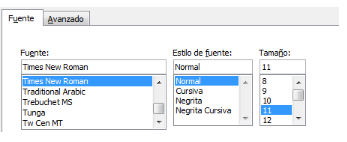
- Times New Roman font, size 11.
- Line spacing 1.15.
- Justified.
- Maximum length: 15 pages (excluding references).
- Figures and tables numbered and cross-marked by author and year.
Author Information
On the last page, include:
- Full name of each author.
- Professional title.
- Academic degrees and the institution that granted them.
- Main institutional affiliation.
- Academic profiles (Google Scholar, CVLAC, SCIELO, ORCID, ResearcherID) if available.
- Postal addresses, email, and contact number.
- Funding or sponsorship information (if applicable).
- Role of each author in the research.
Note: If the research required ethical approval, attach the document or indicate the corresponding Ethics Committee resolution.
Initial Information and Abstracts
- Authors and data: Include full name, education, institutional affiliation (institution first in bold), contact email, and ORCID code.
- Abstract and keywords
- Abstract (Spanish): Descriptive text of no more than 250 words (max. 20 lines). It must explain objectives, methodology, main results, and conclusions. Do not use non-standard abbreviations.
- Keywords: Minimum 4 and maximum 6. Selected from the DeCS index (Health Sciences Descriptors).
- Abstract and Key Words
- Abstract (English): English translation of the abstract, up to 250 words (max. 20 lines), in a single paragraph.
- Key Words: English translation of the keywords. Select from MeSH or Thesaurus. Minimum 4 and maximum 6.
Guidelines for Article Submission
- Introduction:
Includes research objectives, nature of the problem, need for the study, brief theoretical background, methodology, logical argumentation, and scope.
- Methodology:
Describe how the problem was investigated, procedures, analysis methods, study period and location. Must include:
- Type and design of the research.
- Population-sample relationship, selection criteria, inclusion and exclusion criteria.
- Techniques and instruments used.
- Ethical considerations and Ethics Committee approval (if applicable).
- Results:
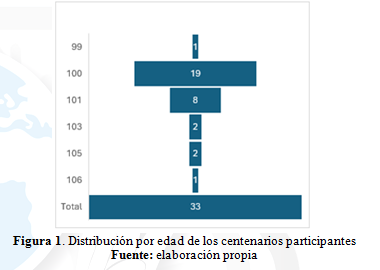
Present analysis of results logically; include graphs, tables, and images numbered according to citation in the text. Each figure/table must include a title and source; graphs must include a brief author interpretation.
- Discussion:
Highlight the most relevant findings, interpret results in relation to background and theoretical framework, clarify whether hypotheses are refuted or confirmed, and discuss theoretical and practical implications.
- Conclusions:
Must respond to each research objective. Be concrete and based on the presented results.
- Images:
All graphic material must be mentioned in the text as "(see Fig. 1)". Calibri (Body) font size 9, italics for internal figure references. Independent numbered material (Fig. 1, Fig. 2, etc.) with descriptive title and source. Allowed formats: PDF, JPG, PNG.
- Tables:
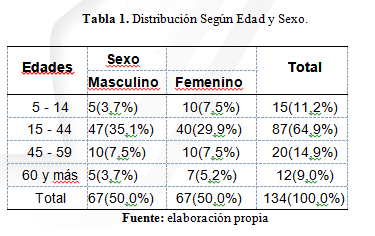
Tables must be numbered; do not abbreviate "Table 1." Title above, Calibri (Body) font size 9, centered and in italics.
- Footnotes and citations:
Notes always appear at the bottom of the page and serve for complementary comments. Do not use bibliographic notes except for textual quotes. Textual quotes >3 lines in a separate paragraph, indented on the left. Calibri (Body) 10 pts, justified.
- References:
-
The document must contain at least 20 references (standard article) and at least 50 for a state-of-the-art review, in APA or Vancouver format as specified.
-
Indexed journals: Preferably publications no older than five years.
-
Recommended Bibliographic Criteria - Maximum 30% Latin American references.
- Minimum 70% international references (outside Latin America).
- Minimum 70% references from the last five years.
- Maximum 15% references to monographs.
- Pages 3–15 (max. 15 pages of content)
-
Bibliographic References
The reference list must follow APA format (or Vancouver if required by the journal). Examples:
-
American Public Health Association (APHA). (1995). Standard methods for the examination of water and wastewater (19th ed.). American Public Health Association.
-
Botero, B. M., & Thomas, R. P. (1987). Low-cost biodigester for the production of fuel and fertilizer from excreta: Manual for its installation, operation, and use. International Center for Tropical Agriculture.
-
Bruce, A., Kouzeli-Katsiri, Y., & Newman, P. J. (Eds.). Anaerobic digestion of sewage sludge and organic agricultural wastes. Elsevier.
(Make sure to include more than 15 references; if the work is a review, include at least 50.)