Introduction to actinic damage and actinomycetes as a promising source for eco-friendly photoprotective compounds
DOI:
https://doi.org/10.24054/bistua.v22i1.2584Keywords:
Photodamage, Sunscreen, Natural Products, Actinomycetota, ActinobacteriaAbstract
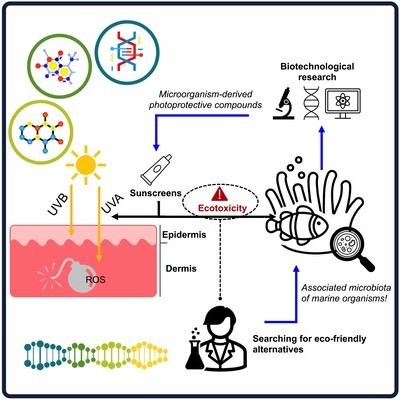
The use of sunscreens is a fundamental strategy of an effective photoprotection scheme. Currently, several ultraviolet (UV) filters have been questioned for their side effects, mainly those that harm the environment. Therefore, there is a demand to find compounds with photoprotective properties. In this regard, natural products have traditionally been a promising source of compounds with diverse biological activities, including those related to photoprotection. Recently, natural microbial products have shown very promising opportunities supported by biotechnological advances, including those possibilities opened up by computer-aided tools. Under this scenario, several studies have recognized the great potential of the phylum Actinomycetota as a source of compounds with photoprotective properties. This review examines how solar radiation induces skin photodamage, explores existing photoprotection strategies, and highlights the immense potential that lies in the specialized metabolism of actinomycetes. These microorganisms offer a rich and untapped vein for the development of innovative products that could transform the sun protection industry.
Downloads
References
Y. Teng et al., “Ultraviolet Radiation and Basal Cell Carcinoma: An Environmental Perspective,” Front. Public Heal., vol. 9, Jul. 2021, doi: 10.3389/fpubh.2021.666528.
U. Osterwalder, M. Sohn, and B. Herzog, “Global state of sunscreens,” Photodermatol. Photoimmunol. Photomed., vol. 30, no. 2–3, pp. 62–80, 2014, doi: 10.1111/phpp.12112.
P. Perugini, M. Bonetti, A. C. Cozzi, and G. L. Colombo, “Topical Sunscreen Application Preventing Skin Cancer: Systematic Review,” Cosmetics, vol. 6, no. 3, p. 42, Jul. 2019, doi: 10.3390/cosmetics6030042.
M. Chatzigianni, P. Pavlou, A. Siamidi, M. Vlachou, A. Varvaresou, and S. Papageorgiou, “Environmental impacts due to the use of sunscreen products: a mini-review,” Ecotoxicology, vol. 31, no. 9, pp. 1331–1345, Nov. 2022, doi: 10.1007/s10646-022-02592-w.
S. L. Schneider and H. W. Lim, “Review of environmental effects of oxybenzone and other sunscreen active ingredients,” J. Am. Acad. Dermatol., vol. 80, no. 1, pp. 266–271, Jan. 2019, doi: 10.1016/j.jaad.2018.06.033.
D. S. Rigel, H. W. Lim, Z. D. Draelos, T. M. Weber, and S. C. Taylor, “Photoprotection for all: Current gaps and opportunities,” J. Am. Acad. Dermatol., vol. 86, no. 3, pp. S18–S26, Mar. 2022, doi: 10.1016/j.jaad.2021.12.023.
J. Aguilera, T. Gracia-Cazaña, and Y. Gilaberte, “New developments in sunscreens,” Photochem. Photobiol. Sci., vol. 22, no. 10, pp. 2473–2482, Oct. 2023, doi: 10.1007/s43630-023-00453-x.
A. L. Harvey, “Natural products in drug discovery,” Drug Discov. Today, vol. 13, no. 19–20, pp. 894–901, 2008, doi: 10.1016/j.drudis.2008.07.004.
K. F. Chater, “Streptomyces inside-out: a new perspective on the bacteria that provide us with antibiotics,” Philos. Trans. R. Soc. B Biol. Sci., vol. 361, no. 1469, pp. 761–768, May 2006, doi: 10.1098/rstb.2005.1758.
M. S. M. Selim, S. A. Abdelhamid, and S. S. Mohamed, “Secondary metabolites and biodiversity of actinomycetes,” J. Genet. Eng. Biotechnol., vol. 19, no. 1, p. 72, Dec. 2021, doi: 10.1186/s43141-021-00156-9.
E. Palazzotto, Y. Tong, S. Y. Lee, and T. Weber, “Synthetic biology and metabolic engineering of actinomycetes for natural product discovery,” Biotechnol. Adv., vol. 37, no. 6, p. 107366, Nov. 2019, doi: 10.1016/j.biotechadv.2019.03.005.
J. Ke and Y. Yoshikuni, “Multi-chassis engineering for heterologous production of microbial natural products,” Curr. Opin. Biotechnol., vol. 62, pp. 88–97, Apr. 2020, doi: 10.1016/j.copbio.2019.09.005.
J. Sánchez-Suárez, E. Coy-Barrera, L. Villamil, and L. Díaz, “Streptomyces-Derived Metabolites with Potential Photoprotective Properties—A Systematic Literature Review and Meta-Analysis on the Reported Chemodiversity,” Molecules, vol. 25, no. 14, p. 3221, Jul. 2020, doi: 10.3390/molecules25143221.
S. Mishra, Richa, and R. P. Sinha, “Biotechnological exploitation of cyanobacterial photoprotective metabolites,” Vegetos, vol. 35, no. 2, pp. 281–297, Jun. 2022, doi: 10.1007/s42535-022-00347-w.
M. Nathaniel Mead, “Benefits of sunlight: a bright spot for human health.,” Environ. Health Perspect., vol. 116, no. 4, p. A167, 2008, doi: 10.1289/ehp.116-a160.
L. H. F. Mullenders, “Solar UV damage to cellular DNA: From mechanisms to biological effects,” Photochem. Photobiol. Sci., vol. 17, no. 12, pp. 1842–1852, 2018, doi: 10.1039/c8pp00182k.
S. Grether-Beck, A. Marini, T. Jaenicke, and J. Krutmann, “Photoprotection of human skin beyond ultraviolet radiation,” Photodermatol. Photoimmunol. Photomed., vol. 30, no. 2–3, pp. 167–174, Apr. 2014, doi: 10.1111/phpp.12111.
C. Marionnet, C. Pierrard, C. Golebiewski, and F. Bernerd, “Diversity of biological effects induced by longwave UVA rays (UVA1) in reconstructed skin,” PLoS One, vol. 9, no. 8, 2014, doi: 10.1371/journal.pone.0105263.
R. Greinert et al., “European Code against Cancer 4th Edition: Ultraviolet radiation and cancer,” Cancer Epidemiol., vol. 39, pp. S75–S83, Dec. 2015, doi: 10.1016/j.canep.2014.12.014.
B. L. Diffey, “Sources and measurement of ultraviolet radiation,” Methods, vol. 28, no. 1, pp. 4–13, Sep. 2002, doi: 10.1016/S1046-2023(02)00204-9.
P. M. Farr, J. E. Besag, and B. L. Diffey, “The Time Course of UVB and UVC Erythema,” J. Invest. Dermatol., vol. 91, no. 5, pp. 454–457, Nov. 1988, doi: 10.1111/1523-1747.ep12476577.
M. G. Kimlin, “Geographic location and vitamin D synthesis,” Mol. Aspects Med., vol. 29, no. 6, pp. 453–461, 2008, doi: 10.1016/j.mam.2008.08.005.
V. Fioletov, J. B. Kerr, and A. Fergusson, “The UV Index: Definition, Distribution and Factors Affecting It,” Can. J. Public Heal., vol. 101, no. 4, pp. I5–I9, Jul. 2010, doi: 10.1007/BF03405303.
D. I. Pattison and M. J. Davies, “Actions of ultraviolet light on cellular structures,” in Cancer: Cell Structures, Carcinogens and Genomic Instability, Basel: Birkhäuser-Verlag, 2006, pp. 131–157.
S. Beissert and K. Loser, “Molecular and Cellular Mechanisms of Photocarcinogenesis,” Photochem. Photobiol., pp. 71117035358006-???, Nov. 2007, doi: 10.1111/j.1751-1097.2007.00231.x.
B. A. Gilchrest, “Actinic Injury,” Annu. Rev. Med., vol. 41, no. 1, pp. 199–210, Feb. 1990, doi: 10.1146/annurev.me.41.020190.001215.
C. R. Taylor, R. S. Stern, J. J. Leyden, and B. A. Gilchrest, “Photoaging/photodamage and photoprotection,” J. Am. Acad. Dermatol., vol. 22, no. 1, pp. 1–15, Jan. 1990, doi: 10.1016/0190-9622(90)70001-X.
T. L. de Jager, A. E. Cockrell, and S. S. Du Plessis, “Ultraviolet Light Induced Generation of Reactive Oxygen Species,” in Ultraviolet Light in Human Health, Diseases and Environment, 2017, pp. 15–23.
W. J. Schreier, P. Gilch, and W. Zinth, “Early events of DNA photodamage,” Annu. Rev. Phys. Chem., vol. 66, no. January, pp. 497–519, 2015, doi: 10.1146/annurev-physchem-040214-121821.
G. T. Bowden, “Prevention of non-melanoma skin cancer by targeting ultraviolet-B-light signalling,” Nat. Rev. Cancer, vol. 4, no. 1, pp. 23–35, 2004, doi: 10.1038/nrc1253.
P. Karran and R. Brem, “Protein oxidation, UVA and human DNA repair,” DNA Repair (Amst)., vol. 44, pp. 178–185, Aug. 2016, doi: 10.1016/j.dnarep.2016.05.024.
M. Sander, M. Sander, T. Burbidge, and J. Beecker, “The efficacy and safety of sunscreen use for the prevention of skin cancer,” CMAJ, vol. 192, no. 50, pp. E1802–E1808, 2020, doi: 10.1503/cmaj.201085.
C. Ulrich et al., “Prevention of non-melanoma skin cancer in organ transplant patients by regular use of a sunscreen: a 24 months, prospective, case-control study,” Br. J. Dermatol., vol. 161, pp. 78–84, Nov. 2009, doi: 10.1111/j.1365-2133.2009.09453.x.
S. Darlington, G. Williams, R. Neale, C. Frost, and A. Green, “A Randomized Controlled Trial to Assess Sunscreen Application and Beta Carotene Supplementation in the Prevention of Solar Keratoses,” Arch. Dermatol., vol. 139, no. 4, Apr. 2003, doi: 10.1001/archderm.139.4.451.
D. C. Whiteman et al., “When to apply sunscreen: a consensus statement for Australia and New Zealand,” Aust. N. Z. J. Public Health, vol. 43, no. 2, pp. 171–175, Apr. 2019, doi: 10.1111/1753-6405.12873.
C. Cole, T. Shyr, and H. Ou-Yang, “Metal oxide sunscreens protect skin by absorption, not by reflection or scattering,” Photodermatol. Photoimmunol. Photomed., vol. 32, no. 1, pp. 5–10, 2016, doi: 10.1111/phpp.12214.
N. A. Shaath, “The Chemistry of Ultraviolet Filters,” in Principles and Practice of Photoprotection, Cham: Springer International Publishing, 2016, pp. 143–157.
N. A. Shaath, “Ultraviolet filters,” Photochem. Photobiol. Sci., vol. 9, no. 4, p. 464, 2010, doi: 10.1039/b9pp00174c.
Y. Ma and J. Yoo, “History of sunscreen: An updated view,” Journal of Cosmetic Dermatology, vol. 20, no. 4. pp. 1044–1049, 2021, doi: 10.1111/jocd.14004.
P. K. Mukherjee, “Bioactive Phytocomponents and Their Analysis,” in Quality Control and Evaluation of Herbal Drugs, Elsevier, 2019, pp. 237–328.
F. Urbach, “The historical aspects of sunscreens,” J. Photochem. Photobiol. B Biol., vol. 64, no. 2–3, pp. 99–104, Nov. 2001, doi: 10.1016/S1011-1344(01)00202-0.
R. Mansuri, A. Diwan, H. Kumar, K. Dangwal, and D. Yadav, “Potential of Natural Compounds as Sunscreen Agents,” Pharmacogn. Rev., vol. 15, no. 29, pp. 47–56, Jun. 2021, doi: 10.5530/phrev.2021.15.5.
K. H. Altendorf, B. Gilch, and F. Lingens, “Biosynthesis of 4-aminobenzoic acid in Aerobacter aerogenes,” FEBS Lett., vol. 16, no. 2, pp. 95–98, Aug. 1971, doi: 10.1016/0014-5793(71)80341-1.
C. Corinaldesi, F. Marcellini, E. Nepote, E. Damiani, and R. Danovaro, “Impact of inorganic UV filters contained in sunscreen products on tropical stony corals (Acropora spp.),” Sci. Total Environ., vol. 637–638, pp. 1279–1285, 2018, doi: 10.1016/j.scitotenv.2018.05.108.
I. Schaap and D. M. E. Slijkerman, “An environmental risk assessment of three organic UV-filters at Lac Bay, Bonaire, Southern Caribbean,” Mar. Pollut. Bull., vol. 135, no. July, pp. 490–495, 2018, doi: 10.1016/j.marpolbul.2018.07.054.
L. Ouchene, I. V. Litvinov, and E. Netchiporouk, “Systemic Absorption of Common Organic Sunscreen Ingredients Raises Possible Safety Concerns for Patients,” J. Cutan. Med. Surg., vol. 23, no. 4, pp. 449–450, 2019, doi: 10.1177/1203475419856849.
H. Malve, “Exploring the ocean for new drug developments: Marine pharmacology,” J. Pharm. Bioallied Sci., vol. 8, no. 2, p. 83, 2016, doi: 10.4103/0975-7406.171700.
M. D. Eastgate, M. A. Schmidt, and K. R. Fandrick, “On the design of complex drug candidate syntheses in the pharmaceutical industry,” Nat. Rev. Chem., vol. 1, pp. 1–16, 2017, doi: 10.1038/s41570-017-0016.
M. A. Wallace, Y.-Q. Cheng, and G. C. Currens, “Construction of a Texas Microbes-Derived New Natural Product Library for Novel Drug Discovery,” 2017, [Online]. Available: https://digitalcommons.hsc.unt.edu/srip/2017/abstracts/18/.
M. C. Y. Chang and J. D. Keasling, “Production of isoprenoid pharmaceuticals by engineered microbes,” Nat. Chem. Biol., vol. 2, no. 12, pp. 674–681, 2006, doi: 10.1038/nchembio836.
J. B. Hart, R. E. Lill, S. J. H. Hickford, J. W. Blunt, and M. H. G. Munro, “The Halichondrins: Chemistry, Biology, Supply and Delivery,” in Drugs from the Sea, Basel: KARGER, 2000, pp. 134–153.
S. Sagar, M. Kaur, and K. P. Minneman, “Antiviral Lead Compounds from Marine Sponges,” Mar. Drugs, vol. 8, no. 10, pp. 2619–2638, Oct. 2010, doi: 10.3390/md8102619.
M. C. Leal, C. Ferrier-Pagès, D. Petersen, and R. Osinga, “Coral aquaculture: applying scientific knowledge to ex situ production,” Rev. Aquac., vol. 8, no. 2, pp. 136–153, Jun. 2016, doi: 10.1111/raq.12087.
E. Belarbi, “Producing drugs from marine sponges,” Biotechnol. Adv., vol. 21, no. 7, pp. 585–598, Oct. 2003, doi: 10.1016/S0734-9750(03)00100-9.
O. K. Radjasa et al., “Highlights of marine invertebrate-derived biosynthetic products: Their biomedical potential and possible production by microbial associants,” Bioorganic Med. Chem., vol. 19, no. 22, pp. 6658–6674, 2011, doi: 10.1016/j.bmc.2011.07.017.
I. Raimundo, S. G. Silva, R. Costa, and T. Keller-Costa, “Bioactive secondary metabolites from octocoral-Associated microbes—New chances for blue growth,” Mar. Drugs, vol. 16, no. 12, 2018, doi: 10.3390/md16120485.
N. Lee, S. Hwang, Y. Lee, S. Cho, B. Palsson, and B.-K. Cho, “Synthetic Biology Tools for Novel Secondary Metabolite Discovery in Streptomyces,” J. Microbiol. Biotechnol., vol. 29, no. 5, pp. 667–686, May 2019, doi: 10.4014/jmb.1904.04015.
T. Weber and H. U. Kim, “The secondary metabolite bioinformatics portal: Computational tools to facilitate synthetic biology of secondary metabolite production,” Synth. Syst. Biotechnol., vol. 1, no. 2, pp. 69–79, Jun. 2016, doi: 10.1016/j.synbio.2015.12.002.
Z. Li, Symbiotic Microbiomes of Coral Reefs Sponges and Corals. 2019.
S. P. Banakar, L. Karthik, and Z. Li, “Mass Production of Natural Products from Microbes Derived from Sponges and Corals,” in Symbiotic Microbiomes of Coral Reefs Sponges and Corals, Dordrecht: Springer Netherlands, 2019, pp. 505–526.
Z. Li, “Sponge and Coral Microbiomes,” in Symbiotic Microbiomes of Coral Reefs Sponges and Corals, Dordrecht: Springer Netherlands, 2019, pp. 17–28.
G. Feng and Z. Li, “Carbon and Nitrogen Metabolism of Sponge Microbiome,” in Symbiotic Microbiomes of Coral Reefs Sponges and Corals, Dordrecht: Springer Netherlands, 2019, pp. 145–169.
I. W. Mudianta et al., “Chemoecological studies on marine natural products: terpene chemistry from marine mollusks,” Pure Appl. Chem., vol. 86, no. 6, pp. 995–1002, Jun. 2014, doi: 10.1515/pac-2013-1111.
L. Liu, Y.-Y. Zheng, C.-L. Shao, and C.-Y. Wang, “Metabolites from marine invertebrates and their symbiotic microorganisms: molecular diversity discovery, mining, and application,” Mar. Life Sci. Technol., vol. 1, no. 1, pp. 60–94, Nov. 2019, doi: 10.1007/s42995-019-00021-2.
M. D. B. Tianero et al., “Species specificity of symbiosis and secondary metabolism in ascidians,” ISME J., vol. 9, no. 3, pp. 615–628, Mar. 2015, doi: 10.1038/ismej.2014.152.
I. Raimundo, S. Silva, R. Costa, and T. Keller-Costa, “Bioactive Secondary Metabolites from Octocoral-Associated Microbes—New Chances for Blue Growth,” Mar. Drugs, vol. 16, no. 12, p. 485, Dec. 2018, doi: 10.3390/md16120485.
A. Bauermeister, P. C. Branco, L. C. Furtado, P. C. Jimenez, L. V. Costa-Lotufo, and T. M. da Cruz Lotufo, “Tunicates: A model organism to investigate the effects of associated-microbiota on the production of pharmaceuticals,” Drug Discov. Today Dis. Model., vol. 28, pp. 13–20, 2018, doi: 10.1016/j.ddmod.2019.08.008.
M. M. Al-shaibani et al., “Biodiversity of Secondary Metabolites Compounds Isolated from Phylum Actinobacteria and Its Therapeutic Applications,” Molecules, vol. 26, no. 15, p. 4504, Jul. 2021, doi: 10.3390/molecules26154504.
P. R. Jensen and W. Fenical, “Strategies for the Discovery of Secondary Metabolites from Marine Bacteria: Ecological Perspectives,” Annu. Rev. Microbiol., vol. 48, no. 1, pp. 559–584, Oct. 1994, doi: 10.1146/annurev.mi.48.100194.003015.
F. Modolon, A. R. Barno, H. D. M. Villela, and R. S. Peixoto, "Ecological and biotechnological importance of secondary metabolites produced by coral associated bacteria," J. Appl. Microbiol., vol. 129, no. 6, pp. 1441–1457, Dec. 2020, doi: 10.1111/jam.14766.
S. A. Kautsar et al., “MIBiG 2.0: a repository for biosynthetic gene clusters of known function,” Nucleic Acids Res., Oct. 2019, doi: 10.1093/nar/gkz882.
S. R. Eddy, “Profile hidden Markov models,” Bioinformatics, vol. 14, no. 9, pp. 755–763, Oct. 1998, doi: 10.1093/bioinformatics/14.9.755.
J. A. van Santen et al., “The Natural Products Atlas: An Open Access Knowledge Base for Microbial Natural Products Discovery,” ACS Cent. Sci., vol. 5, no. 11, pp. 1824–1833, Nov. 2019, doi: 10.1021/acscentsci.9b00806.
V. L. Challinor and H. B. Bode, “Bioactive natural products from novel microbial sources,” Ann. N. Y. Acad. Sci., vol. 1354, no. 1, pp. 82–97, Sep. 2015, doi: 10.1111/nyas.12954.
B. Wei et al., “An atlas of bacterial secondary metabolite biosynthesis gene clusters,” Environ. Microbiol., vol. 23, no. 11, pp. 6981–6992, 2021, doi: 10.1111/1462-2920.15761.
A. Gavriilidou et al., “Compendium of specialized metabolite biosynthetic diversity encoded in bacterial genomes,” Nat. Microbiol., vol. 7, no. 5, pp. 726–735, May 2022, doi: 10.1038/s41564-022-01110-2.
H. J. Lacey and P. J. Rutledge, “Recently Discovered Secondary Metabolites from Streptomyces Species,” Molecules, vol. 27, no. 3, p. 887, Jan. 2022, doi: 10.3390/molecules27030887.
K. Alam et al., “Streptomyces: The biofactory of secondary metabolites,” Front. Microbiol., vol. 13, Sep. 2022, doi: 10.3389/fmicb.2022.968053.
F. Del Carratore, E. K. Hanko, R. Breitling, and E. Takano, “Biotechnological application of Streptomyces for the production of clinical drugs and other bioactive molecules,” Curr. Opin. Biotechnol., vol. 77, p. 102762, Oct. 2022, doi: 10.1016/j.copbio.2022.102762.
S. Soldatou, G. H. Eldjarn, A. Huerta-Uribe, S. Rogers, and K. R. Duncan, “Linking biosynthetic and chemical space to accelerate microbial secondary metabolite discovery,” FEMS Microbiol. Lett., vol. 366, no. 13, Jul. 2019, doi: 10.1093/femsle/fnz142.
A. A. Akinsemolu, “The role of microorganisms in achieving the sustainable development goals,” J. Clean. Prod., vol. 182, pp. 139–155, May 2018, doi: 10.1016/j.jclepro.2018.02.081.
K. Timmis et al., “The contribution of microbial biotechnology to sustainable development goals,” Microb. Biotechnol., vol. 10, no. 5, pp. 984–987, Sep. 2017, doi: 10.1111/1751-7915.12818.
N. S. McCarty and R. Ledesma-Amaro, “Synthetic Biology Tools to Engineer Microbial Communities for Biotechnology,” Trends Biotechnol., vol. 37, no. 2, pp. 181–197, Feb. 2019, doi: 10.1016/j.tibtech.2018.11.002.
D. B. Pedrolli et al., “Engineering Microbial Living Therapeutics: The Synthetic Biology Toolbox,” Trends Biotechnol., vol. 37, no. 1, pp. 100–115, Jan. 2019, doi: 10.1016/j.tibtech.2018.09.005.
H. HOEKSEMA and C. G. SMITH, “Novobiocin,” Prog. Ind. Microbiol., vol. 3, pp. 91–139, 1961, [Online]. Available: http://www.ncbi.nlm.nih.gov/pubmed/13714897.
N. Stankovic et al., “Streptomyces sp. JS520 produces exceptionally high quantities of undecylprodigiosin with antibacterial, antioxidative, and UV-protective properties,” Appl. Microbiol. Biotechnol., vol. 96, no. 5, pp. 1217–1231, 2012, doi: 10.1007/s00253-012-4237-3.
W. Sajjad, S. Ahmad, I. Aziz, S. S. Azam, F. Hasan, and A. A. Shah, “Antiproliferative, antioxidant and binding mechanism analysis of prodigiosin from newly isolated radio-resistant Streptomyces sp. strain WMA-LM31,” Mol. Biol. Rep., vol. 45, no. 6, pp. 1787–1798, 2018, doi: 10.1007/s11033-018-4324-3.
F. A. Kuehl, R. L. Peck, A. Walti, and K. Folkers, “Streptomyces Antibiotics. I. Crystalline Salts of Streptomycin and Streptothricin,” Science (80-. )., vol. 102, no. 2637, pp. 34–35, Jul. 1945, doi: 10.1126/science.102.2637.34.
Deutsche Sammlung von Mikroorganismen und Zellkulturen, “Genus Streptomyces,” List of Prokaryotic names with Standing in Nomenclature, 2023. https://lpsn.dsmz.de/genus/streptomyces (accessed Dec. 23, 2023).
D. Tang, L.-L. Liu, Q.-R. He, W. Yan, D. Li, and J.-M. Gao, “Ansamycins with Antiproliferative and Antineuroinflammatory Activity from Moss-Soil-Derived Streptomyces cacaoi subsp. asoensis H2S5,” J. Nat. Prod., vol. 81, no. 9, pp. 1984–1991, Sep. 2018, doi: 10.1021/acs.jnatprod.8b00203.
C. Lu et al., “Two new lankacidin-related metabolites from Streptomyces sp. HS-NF-1178,” J. Antibiot. (Tokyo)., vol. 71, no. 3, pp. 397–401, Mar. 2018, doi: 10.1038/s41429-017-0004-0.
M. Liu, P. Shi, C. Lu, and L. Zhong, “Isolation and Identification of Secondary Metabolites From Streptomyces sp. SP301,” Nat. Prod. Commun., vol. 14, no. 7, p. 1934578X1986179, Jul. 2019, doi: 10.1177/1934578X19861791.
D. Carretero-Molina et al., “New Napyradiomycin Analogues from Streptomyces sp. Strain CA-271078,” Mar. Drugs, vol. 18, no. 1, p. 22, Dec. 2019, doi: 10.3390/md18010022.
W. Yi, L. Qin, X.-Y. Lian, and Z. Zhang, “New Antifungal Metabolites from the Mariana Trench Sediment-Associated Actinomycete Streptomyces sp. SY1965,” Mar. Drugs, vol. 18, no. 8, p. 385, Jul. 2020, doi: 10.3390/md18080385.
M. Jiang, Y. Zhang, Y. Zhang, Z. Ma, and J. Wang, “Suncheonosides E–M and Benzothioate Derivatives from the Marine-Derived Streptomyces sp. ZSN77,” J. Nat. Prod., Jun. 2022, doi: 10.1021/acs.jnatprod.2c00320.
M. Watve, R. Tickoo, M. Jog, and B. Bhole, “How many antibiotics are produced by the genus Streptomyces ?,” Arch. Microbiol., vol. 176, no. 5, pp. 386–390, Nov. 2001, doi: 10.1007/s002030100345.
C. E. Ezeobiora, N. H. Igbokwe, D. H. Amin, N. V. Enwuru, C. F. Okpalanwa, and U. E. Mendie, “Uncovering the biodiversity and biosynthetic potentials of rare actinomycetes,” Futur. J. Pharm. Sci., vol. 8, no. 1, p. 23, Dec. 2022, doi: 10.1186/s43094-022-00410-y.
J. Sánchez-Suárez, L. Díaz, E. Coy-Barrera, and L. Villamil, “Specialized Metabolism of Gordonia Genus: An Integrated Survey on Chemodiversity Combined with a Comparative Genomics-Based Analysis,” BioTech, vol. 11, no. 4, p. 53, Nov. 2022, doi: 10.3390/biotech11040053.
H. Sowani, M. Kulkarni, and S. Zinjarde, “An insight into the ecology, diversity and adaptations of Gordonia species,” Crit. Rev. Microbiol., vol. 44, no. 4, pp. 393–413, Jul. 2018, doi: 10.1080/1040841X.2017.1418286.
L. Verschooten, S. Claerhout, A. Van Laethem, P. Agostinis, and M. Garmyn, “New Strategies of Photoprotection,” Photochem. Photobiol., vol. 82, no. 4, pp. 1016–1023, Jul. 2006, doi: 10.1562/2006-04-27-IR-884.
J. Sánchez-Suárez, L. Villamil, L. Díaz, and E. Coy-Barrera, “Uncovering Streptomyces-Derived Compounds as Cosmeceuticals for the Development of Improved Skin Photoprotection Products: An In Silico Approach to Explore Multi-Targeted Agents,” Sci. Pharm., vol. 90, no. 3, p. 48, Aug. 2022, doi: 10.3390/scipharm90030048.
J. C. J. M. D. S. Menezes and M. F. Diederich, “Natural dimers of coumarin, chalcones, and resveratrol and the link between structure and pharmacology,” Eur. J. Med. Chem., vol. 182, p. 111637, Nov. 2019, doi: 10.1016/j.ejmech.2019.111637
A. Al-Mourabit, M. A. Zancanella, S. Tilvi, and D. Romo, “Biosynthesis, asymmetric synthesis, and pharmacology, including cellular targets, of the pyrrole-2-aminoimidazole marine alkaloids,” Nat. Prod. Rep., vol. 28, no. 7, p. 1229, 2011, doi: 10.1039/c0np00013b.
N. G. M. Gomes, R. B. Pereira, P. B. Andrade, and P. Valentão, “Double the Chemistry, Double the Fun: Structural Diversity and Biological Activity of Marine-Derived Diketopiperazine Dimers,” Mar. Drugs, vol. 17, no. 10, p. 551, Sep. 2019, doi: 10.3390/md17100551.
J. Sánchez-Suárez, L. Villamil, E. Coy-Barrera, and L. Díaz, “Cliona varians-Derived Actinomycetes as Bioresources of Photoprotection-Related Bioactive End-Products,” Mar. Drugs, vol. 19, no. 12, p. 674, Nov. 2021, doi: 10.3390/md19120674.
A. R. Young et al., “Optimal sunscreen use, during a sun holiday with a very high ultraviolet index, allows vitamin D synthesis without sunburn,” Br. J. Dermatol., vol. 181, no. 5, pp. 1052–1062, Nov. 2019, doi: 10.1111/bjd.17888.
M. Landers, S. Law, and F. J. Storrs, “Contact Urticaria, Allergic Contact Dermatitis, and Photoallergic Contact Dermatitis from Oxybenzone,” Dermat. (formerly Am. J. Contact Dermatitis), vol. 14, no. 01, p. 033, 2003, doi: 10.2310/6620.2003.38769.
A. Siller, S. C. Blaszak, M. Lazar, and E. Olasz Harken, “Update About the Effects of the Sunscreen Ingredients Oxybenzone and Octinoxate on Humans and the Environment,” Plast. Surg. Nurs., vol. 38, no. 4, pp. 158–161, Oct. 2018, doi: 10.1097/PSN.0000000000000244.
J. C. DiNardo and C. A. Downs, “Can oxybenzone cause Hirschsprung’s disease?,” Reprod. Toxicol., vol. 86, pp. 98–100, Jun. 2019, doi: 10.1016/j.reprotox.2019.02.014.
A. Kariagina et al., “Benzophenone-3 promotion of mammary tumorigenesis is diet-dependent,” Oncotarget, vol. 11, no. 48, pp. 4465–4478, Dec. 2020, doi: 10.18632/oncotarget.27831.
D. Sánchez-Quiles and A. Tovar-Sánchez, “Are sunscreens a new environmental risk associated with coastal tourism?,” Environ. Int., vol. 83, pp. 158–170, 2015, doi: 10.1016/j.envint.2015.06.007.
P. Gago-Ferrero, M. S. Díaz-Cruz, and D. Barceló, “UV filters bioaccumulation in fish from Iberian river basins,” Sci. Total Environ., vol. 518–519, pp. 518–525, 2015, doi: 10.1016/j.scitotenv.2015.03.026.
J. C. DiNardo and C. A. Downs, “Dermatological and environmental toxicological impact of the sunscreen ingredient oxybenzone/benzophenone-3,” J. Cosmet. Dermatol., vol. 17, no. 1, pp. 15–19, Feb. 2018, doi: 10.1111/jocd.12449.
D. Fivenson, N. Sabzevari, S. Qiblawi, J. Blitz, B. B. Norton, and S. A. Norton, “Sunscreens: UV filters to protect us: Part 2-Increasing awareness of UV filters and their potential toxicities to us and our environment,” Int. J. Women’s Dermatology, vol. 7, no. 1, pp. 45–69, 2021, doi: 10.1016/j.ijwd.2020.08.008.
R. Costanza et al., “The value of the world’s ecosystem services and natural capital,” Nature, vol. 387, no. 6630, pp. 253–260, May 1997, doi: 10.1038/387253a0.
S. Pawlowski, M. Moeller, I. B. Miller, M. Y. Kellermann, P. J. Schupp, and M. Petersen Thiery, “UV filters used in sunscreens A lack in current coral protection?,” Integr. Environ. Assess. Manag., vol. 17, no. 5, pp. 926–939, Sep. 2021, doi: 10.1002/ieam.4454.
O. P. Egambaram, S. Kesavan Pillai, and S. S. Ray, “Materials Science Challenges in Skin UV Protection: A Review,” Photochem. Photobiol., vol. 96, no. 4, pp. 779–797, Jul. 2020, doi: 10.1111/php.13208.
Downloads
Published
Versions
- 2024-06-21 (4)
- 2024-06-21 (3)
- 2024-02-10 (2)
- 2024-02-10 (1)
Issue
Section
License
Copyright (c) 2024 Jeysson Fabián Sánchez Suárez, Luis Eduardo Díaz Barrera, Luisa Villamil Díaz, Ericsson David Coy Barrera

This work is licensed under a Creative Commons Attribution-NonCommercial-NoDerivatives 4.0 International License.