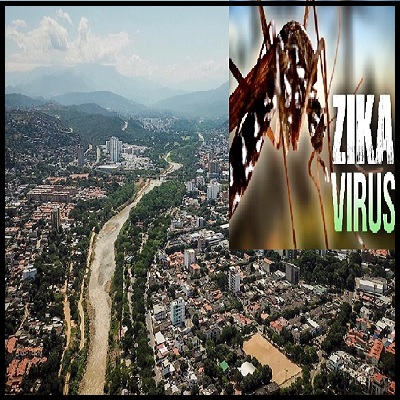
Determining risk factors in the transmission of ZIKA virus infection in the municipality of Cúcuta and its metropolitan area.
DOI:
https://doi.org/10.24054/bistua.v21i2.2318Keywords:
ZIKA Virus, Risk Factors, Disease TransmissionAbstract
The objective of this research is to describe the determining risk factors in the transmission of ZIKA virus infection in the municipality of Cúcuta. To achieve this objective, a Base Line is established with 50 questions on the knowledge presented by families with the ZIKA Virus disease and the risk factors that favor the presence of the transmitting vector in the study area. The results allow us to determine that the vast majority of the families interviewed know about the disease caused by the ZIKA Virus and are very well aware of the risk factors that are determinant in the transmission of the disease. The presence of Aedes sp. in water storage tanks, it is a constant in the households interviewed. In the same way, the presence of garbage in the patios of the houses occurs in the vast majority of these families, as well as the sociocultural behaviors that favor the risk of contagion in the study area.
Downloads
References
Teixeira M.G.,Costa M.C.N.,De Oliveira W.K.,Nunes M.L. y LC Rodrigues. The epidemic of Zika virus-related microcephaly in Brazil: detection, control, etiology, and future scenarios. Rev. Am J Public Health 106[4] (2016) 601-5. DOI:10.2105/AJPH.2016.303113
Musso D., Gubler D.J., Zikavirus. Rev. ClinMicrobiol.29[3](2016) 487-524. DOI:10.1128/CMR.00072-15
Parra B.M.,Lizarazo J.M.,Jimenez J.A.A.,Zea-Vera A.F.M.D.Guillain Barré syndrome Associated with zika virus infection in Colombia. Rev. J Med 20.,375(16) (2016) 1513-1523.doi: 10.1056/NEJMoa1605564
Beltran Silva, S.L., Chacon Hernandez S,. Moreno Palacios S. E., Pereyra Molina J.A. Diagnostico clinico y diferencial: dengue, chikunguna y zika. Rev Med Hosp Gen Mex.81[3](2018) 146-153. https://doi.org/10.1016/j.hgmx.2016.09.011
Piovezan R., de Azevedo, T.S.,Faria E.,Veroneze R.,C. Von Zuben J.,Von Zuben F. J.,Sallum M.A.M. Assessing the effect of Aedes [Stegomyia] aegypti [Linnaeus, 1762] control based on machine learning for predicting the spatiotemporal distribution of eggs in ovitraps. Rev Dialogues in Health 1 (2022]100003. http://dx.doi.org/10.1016/j.dialog. 2022.100003
PAHO. Guía para la vigilancia de la enfermedad por el virus del Zika y sus complicaciones. PAHO. 2016.
PAHO. Alerta epidemiológica infección por virus zika. PAHO. 2015Mayo07.
Instituto Nacional de Salud INS. Protocolo de Vigilancia en Salud Pública. Enfermedad por Virus Zika. 2016
PAHO. Síndrome neurológico, anomalías congénitas einfección por virus Zika. 2016.
Marban-Castro E., Gonce A.,V Fumadó., Romero L. -y Bardají A. Zikavirus infection in pregnant women and their children. Rev. Review a, European Journal of Obstetrics & Gynecology and Reproductive Biology265 (2021])162–168 doi.org/10.1016/j.ejogrb.2021.07.012
Searles M., Mora J., Carlo L., Heydari N., Takyiwaa Y., Borbor-Cordova., Campagna M.J. Zika virus knowledge and vaccine acceptance among undergraduate students in Guayaquil, Ecuador. Rev. Vaccine X 28.,(2022) 13:100258.doi: 10.1016/j.jvacx.2022.100258
Anil K. Guillain Barrés syndrome: causes inmunopathogenic mechanisms and treatement. Jounal of Expert. Rev Clin Immunol12(11) (2016)1175-1189.doi: 10.1080/1744666X.2016.1193006.Epub 2016 Jun 21.
LuccheseG.,Kanduc D. Zikavirus and autoimmunity: From microcephaly to Guillain-Barré syndrome, and beyond Autoimmun Rev 15(8)(2016) 801-8. doi: 10.1016/j.autrev.2016.03.020.Epub 2016 Mar 25.
Cauchemez S., Besnard M.,Bompard P., Dub T. Asociacion entre el virus Zika y la microcefalia en la Polinesia francesa. Rev. The Lancet. Vol 387 (2016). DOI:https://doi.org/10.1016/S0140-6736(16)00651-6
Parra B.M., Lizarazo J.M., Jimenez J.A.A. Zea-Vera A.F. Guillain Barrés syndrome Associated with zika virus infection in Colombia. Rev. N Engl J Med. 20.,375(16)(2016)1513-1523.DOI: 10.1056/NEJMoa1605564
Arredendo J.L., Garcia M.H.A. Arbovirus en latinoamerica. R e v .ActaPediatrMx.37[2](2016) p. 111-31. doi.org/10.2105/AJPH.2016.303113
Musso D., Gubler D.J. Zika virus. Rev Clin Microbiol.29[3](2016)487-524.DOI:10.1128/CMR.00072-15
Teixeira M.G., Costa M.C.N., De Oliveira W.K., Nunes M.L., Rodrigues L.C. The epidemic of Zika virus-related microcephaly in Brazil: detection, control, etiology, and future scenarios. Rev Am J Public Health. 106[4](2016) 601-5.DOI:10.2105/AJPH.2016.303113
Instituto nacional de salud. Boletín epidemiológico, 2017
Instituto nacional de salud. Boletín epidemiológico, 2018
Mora A.F., Porras A., Pío F., Estimating the burden of arboviral diseases in Colombia between 2013 and 2016 Rev International Journal of Infectious Diseases Vol. 97,(2020) 81-89. Doi.org/10.1016/j.ijid.2020.05.051
Instituto nacional de salud. Boletín epidemiológico, 2023
Guerrero G., Velázquez V., Vargas F.E., Lara M.A., Rodríguez E., Andraca C., Sánchez J. Distribución geográfica de larvas de Aedes aegypti. [Diptera: Culicidae] Y Riesgo De Transmision de Dengue, Chikungunya y Zika en Tecoanapa. Rev. Entomología mexicana, 3:(2016) 722-728
Gasperi G., Bellini R., Malacrida A.R., Crisanti A., Dottori M., Aksoy S.A new threatlooming over the Mediterranean basin: emergence of viral diseases transmitted by Aedes albopictus mosquitoes. Rev. PLoS Negl Trop Dis.,6(9) (2012) e1836doi:10.1371/journal.pntd.0001836.
Beltrán-Silva S.L., Chacón-Hernández S.S., Moreno-Palacios E., Pereyra-Molin J.Á. Diagnóstico clínico y diferencial: dengue, chikunguña y zika. Rev Med Hosp Gen Mex. 81[3](2018) 146-153DOI:10.1016/j.hgmx.2016.09.011
Gutierrez-LopezaR., FiguerolaJ.,MartínezJ. Methodological procedures explain observed differences in the competence of European populations of Aedes albopictus for the transmission of Zika virus. Rev Acta Tropica 237 (2023)106724 https://doi.org/10.1016/j.actatropica.2022.106724
Costanzo K.S.,Schelble S.,Jerz K.,KeenanM. The effect of photoperiod on life history and blood feeding activity in Aedes albopictus and Aedes aegypti [Diptera: Culicidae]. Rev J Vector Ecol. (2015) Jun.,40[1]:164-71.DOI:10.1111/jvec.12146
Khan A.G., KBushra. Epidemiological trends and risk factors associated with dengue disease in Pakistan [1980–2014]: a systematic literature search and analysis Jehangir. Rev BMC Public Health.18:745(2018] https://doi.org/10.1186/s12889-018-5676-2
Manni M., Guglielmino C.,Scolari F., Vega A., Failloux A., Somboon P., Lisa A., Savini G.,Bonizzoni M., Gomulski L., Malacrida A., Gasperi G.Genetic evidence for a worldwidechaotic dispersion pattern of the arbovirus vector, Aedes albopictus. Rev PLoS Negl Trop Dis.30.,11[1](2017) e0005332.doi:10.1371/journal.pntd.0005332
Shah H.,Pandey B.D. Risk factors of adult Dengue Fever in urban community of Nepal. Rev Glob J Infect Dis Clin Res. 7[1](2021).064-069. DOI: https://doi.org/10.17352/2455-5363.000049
Piedrahita L.D., Ivony Y., Agudelo S., Marin K., Trujillo A.I., Osorio E., Arboleda-Sanchez S.O., Restrepo B.N. Risk Factors Associated with Dengue Transmission and Spatial Distribution of High Seroprevalence in School children from the Urban Area of Medellin, Colombia. Rev Canadian Journal of Infectious Diseases and Medical Microbiology. Volume 11(2018) https://doi.org/10.1155/2018/2308095
Brito C. Zika virus: a New Chapter in the History of Medicine. Rev, Acta Med Port. 28[6](2015) 679-80.DOI:10.20344/amp.7341
Musso D.,Gubler D.J.Zika virus.Rev Clin Microbiol.29[3](2015) 487-524. DOI:10.1128/CMR.00072-15
Plan de respuesta frente a la fiebre Por el virus zika. Ministerio de salud y protección social, Dirección de promoción y prevención Bogota d.c.,marzo de 2016.
Arévalo A., Suarez M. Virus Zika. Rev. Méd. La Paz. vol.22 no.1(2016)
Rivera O. Aedes aegypti virus dengue, chikungunia, zika y el cambio climático. Máxima alerta medica oficial. Redvet rev.electron.vet. Vol15 (10) (2014).
Hashim N., Ahmad H., Talib A. Co-breeding Association of Aedes albopictus [Skuse] and Aedes aegypti [Linnaeus] [Diptera: Culicidae] in Relation to Location and Container Size. Rev Trop Life Sci Res. 29[1](2018)213–227. doi:10.21315/tlsr2018.29.1.14
Cabrera Y., Vega J. Infección por virus Zika como un reto para la Salud Pública. Rev. Med. Electrón. vol.39 no.2(2017)
Downloads
Published
Versions
- 2023-12-12 (2)
- 2023-07-31 (1)
Issue
Section
License
Copyright (c) 2023 Jenny Fernanda Espinosa Carvajal, Edwar Alfredo Jaramillo Mejía, Omar Geovanny Perez Ortiz

This work is licensed under a Creative Commons Attribution-NonCommercial-NoDerivatives 4.0 International License.